Token burning is often talked about in the crypto world, but many people are not sure what it really means. New users may hear the term and feel confused or unsure. This guide breaks token burning into easy ideas using plain words and clear examples. It is written so anyone, even someone new to crypto, can read it without feeling lost or pressured.
This content is shared only to help you learn. It does not give money or investment advice.
What Does Token Burning Mean?
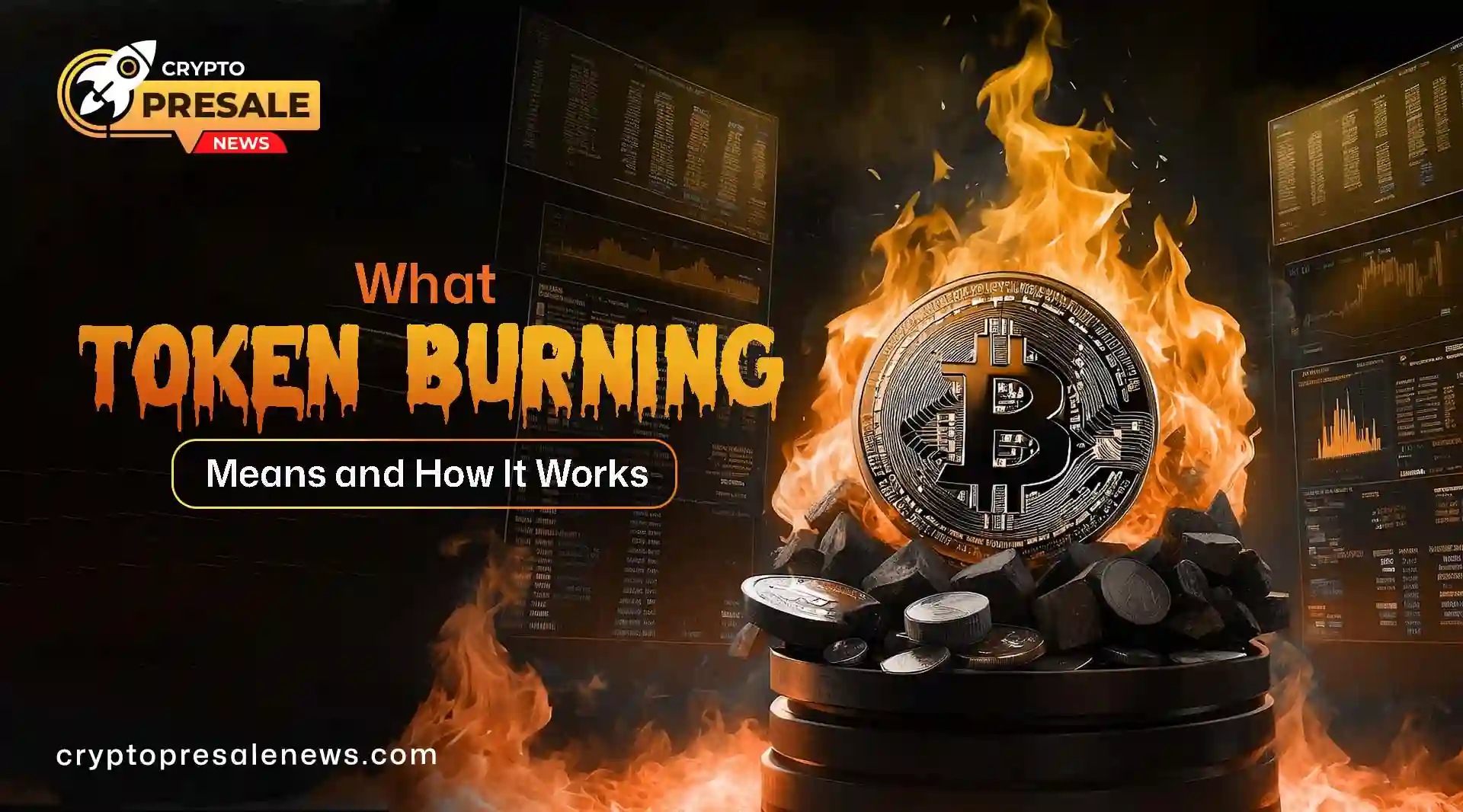
It means removing crypto tokens forever. When cryptos are burned, they are sent to a special wallet. This wallet cannot be opened. No one owns it. No one can use the tokens again. Once tokens go into this wallet, they are gone for good. So, it decreases the number of cryptos that exist.
Why Do Crypto Projects Use Token Burning?
Many crypto projects create a large number of cryptos at the start. Over time, having too many cryptos can cause problems when the sale becomes too large.
Token burning helps solve this issue.
Projects usually burn to-
- Reduce extra supply.
- Keep balance in the system.
- Show plan for the future.
- Build user trust.
- Control inflation.
Token burning does not create value by magic.
How It Works in Real Life
It follows a clear and open process on the blockchain.
First Step- Token Selection
The project chooses how many cryptos to burn. This number is often shared in advance.
Second Step: Sending Tokens
The cryptos are sent to a burn wallet.
Third Step- Blockchain Record
The blockchain records the transaction for everyone to see.
Final Step- Supply Drop
The total supply goes down forever.
This process cannot be undone.
What Is a Burn Wallet?
A burn wallet is a public address with no private key.
This means:
- No one can open it.
- No one can move tokens from it.
- Coins sent there are locked forever.
Most burn wallets are easy to spot and can be checked by anyone.
Different Types of Token Burning
It can happen in different ways.
- Fixed Burns- These happen at set times, like once every month or year.
- Auto Burns- Smart contracts burn cryptos during transfers or trades.
- Fee-Based Burns- A small part of each transaction is burned.
- Buy and Burn- The project buys cryptos from the market and burns them.
Each method depends on the project’s design.
Token Burning and Supply
Supply means the total number of cryptos that exist.
When burn happens:
- Supply goes down.
- Scarcity may rise.
- Balance may improve.
But supply alone does not control price.
Does It Increase Price?
Many people believe it always raises prices. This is not true.
Price depends on:
- Demand- This is about how many folks are interested in snagging the crypto.
- Real use- This means the crypto actually does something useful and is worth something.
- Trust- You can trust it if there's a solid game plan and a team that's upfront.
- Market conditions- This shows how the overall crypto market is doing.
It only reduces supply. If demand is weak, price may not change.
Token Burning vs Locking
These two ideas are often mixed up.
Burns
- Permanent
- Tokens are destroyed
Locking
- Temporary
- Tokens return later
Burns removes tokens forever. Locking only delays use.
Burning vs Minting
These are opposite actions.
Burns
- Removes tokens.
- Lowers supply
Minting
- Creates new tokens
- Raises supply
Good projects clearly explain both actions.
How Can Users Check Token Burning?
Users should always verify claims.
You can check it by:
- Using a blockchain explorer.
- Looking at burn wallet transfers.
- Checking total supply numbers.
This helps avoid false information.
Benefits of It for Users
When done honestly, it can help users by:
- Reducing oversupply risk
- Making supply rules clear.
- Improving transparency
- Supporting long-term plans.
Still, it works best with real use cases.
Risks Linked to It
This process itself is not risky. Poor projects are the real risk.
Common problems include:
- Fake burn claims
- Burns used only for hype
- No real product.
- Poor communication.
Users should always research deeply.
Common Myths
Let’s clear some common myths.
- Burn guarantees profit. No, nothing in crypto is guaranteed.
- More burns means a better project. Not always, use matters more.
- Burned tokens can come back. It is Impossible.
Knowing the truth helps users stay safe.
Why Transparency Matters
Trust is very important in crypto.
A good plan includes:
- Clear rules
- Public burn addresses
- Easy tracking
- Honest updates
Without transparency, burns has little value.
Is It Legal?
It is a technical process. Laws depend on location.
Users should:
- Follow local rules.
- Use trusted platforms.
- Avoid unclear projects.
This reduces risk.
Who Controls Token Burning?
its rules are set by:
- Project teams
- Smart contracts.
- Community votes
Good projects explain these rules early.
Long-Term Role
It works best when combined with:
- Real use.
- Active users.
- Clear goals
- Honest teams
Burning alone cannot save a weak project.
Key Points to Remember
Here is a simple recap:
- It removes cryptos forever.
- It lowers total supply.
- It is recorded on the blockchain.
- It does not promise profit.
- Transparency is key.
Final Thoughts
Basically, burn tokens is a pretty simple idea that does a big job. It is a way for projects to control how many tokens are in use and shows future planning. But when looking at a crypto project, you can not decide based only on this process. Taking time, learning more, and staying patient is always the best step.