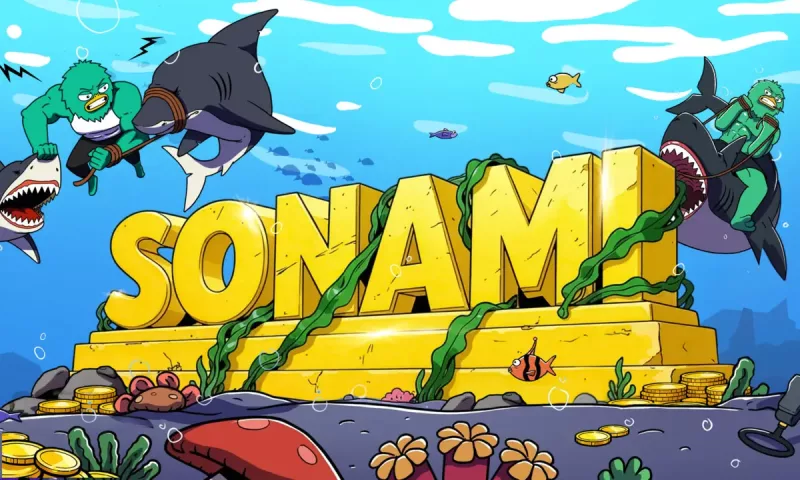
Sonami ($SNMI), announced December 8, 2025, markets itself as the first Layer 2 token built on the Solana blockchain. It aims to reduce network congestion during high-activity periods like meme coin surges, NFT mints, and rapid-fire decentralized trading. As of the announcement, the project remained in its presale phase ahead of a planned Token Generation Event. That's a distinction worth keeping in mind when evaluating the specific claims being made about the technology's capabilities.
The Congestion Problem Sonami Is Targeting
Solana is celebrated for its speed, but the network can experience genuine congestion during moments of high activity. These episodes signal strong user interest in the underlying activity. But they can also stress the network, leading to delayed transactions and inconsistent user experiences for everyday users trying to interact with the chain during peak demand.
How the Project Says Its Solution Works
The Layer 2 network is described as using transaction bundling. It intelligently groups multiple user interactions into a single, optimized transaction, ultimately processed on Solana's Layer 1. According to the project, this significantly reduces network load, aiming to ensure scalability without compromising the base chain's speed or security. Zakit Mobad, founder of Sonami Foundation, said the expectation in Web3 is quickly shifting from "fast most of the time" to "fast all the time." He framed the project as the performance multiplier meant to unlock Solana's full potential.
What Stage the Project Is Actually At
As of the initial announcement, the team was continuing its presale as it advanced toward its Token Generation Event. It planned to pursue listings on both decentralized and centralized exchanges once the presale concludes. This matters for how the specific claims should be read. Statements about performance and congestion reduction describe an intended, designed capability, not a track record demonstrated on live, deployed infrastructure processing real mainnet transaction volume.
Stated Target Use Cases
The team is prioritizing sectors where instant execution matters most, including real-time multiplayer gaming, high-volume decentralized trading environments with heavy order flow, and applications relying on fast, low-value transactions. These use cases align logically with what transaction bundling is theoretically good at: reducing per-transaction overhead for high-frequency, small-value activity. But again, this reflects intended design, not measured production performance.
What to Verify Before Engaging With a Presale-Stage Infrastructure Project
For any project still in presale making infrastructure performance claims, it's worth checking a few things. Is there a public testnet demonstrating the bundling mechanism in practice? Have the team's technical claims been reviewed by an independent security or performance auditor? Is "Layer 2 for Solana" a technically accurate description of the architecture, or a marketing simplification? Solana's own architecture differs meaningfully from Ethereum in ways that affect what a "Layer 2" solution can and should look like.
Who's Building Sonami
Sonami is described as a Solana-based Layer 2 initiative created by a team of blockchain engineers focused on addressing protocol-level scaling constraints. Detailed public information about the team's specific prior track record wasn't extensively available in the announcement materials reviewed for this piece.
Evaluating infrastructure claims from presale-stage projects benefits from the same due-diligence framework outlined in our guide on crypto presale risks and scams, particularly around verifying technical claims independently before committing funds.
Glossary
- Transaction bundling: A scaling technique that groups multiple individual transactions into a single, optimized transaction before final settlement.
- Layer 2: A secondary framework or protocol built on top of an existing blockchain (Layer 1), designed to improve scalability or reduce costs.
- TGE (Token Generation Event): The point at which a project's native token is created and becomes available for distribution or trading.
Disclaimer
This overview is for informational purposes only and is not financial or investment advice. Presale-stage infrastructure projects carry significant execution and technical risk, and performance claims should be independently verified before committing funds. Confirm current project status directly through official Sonami announcements.