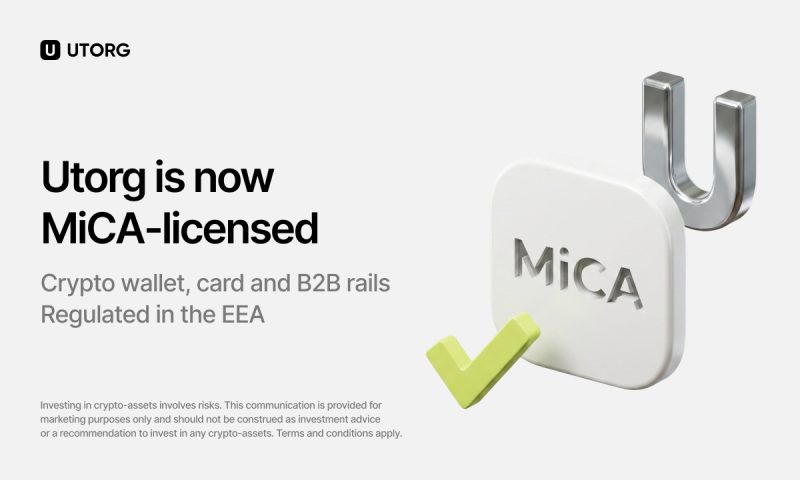
The Utorg MiCA license became effective July 1, 2026, the exact date on which the EU's transitional period under the Markets in Crypto-Assets regulation ended. Crypto-asset service providers without full authorization could no longer legally serve users in the European Economic Area. Utorg, a crypto wallet and card platform built on institutional-grade infrastructure, is among a small number of platforms to have completed the full authorization process. It's now cleared to operate across all 29 EEA member states, a combined market of over 450 million people.
What July 1 Actually Meant for the Broader Industry
In the months leading up to the deadline, a significant portion of the market withdrew from or restricted European operations, rather than pursuing full authorization. The contrast played out immediately. While Estonia-based exchange Coinmetro filed for bankruptcy around the same deadline, Utorg announced it had received full authorization, positioning itself as one of the few platforms ready to serve the entire EEA from day one of the new regulatory regime.
What MiCA Actually Requires of Authorized Platforms
MiCA is the EU's first unified regulatory framework for crypto-assets, establishing binding standards on consumer protection, transparency, and financial integrity across all member states. For Utorg, the authorization is the result of a full regulatory review of its products, operations, and compliance infrastructure. It also means ongoing oversight. The company is now subject to regular reporting obligations and supervisory review under EU financial law.
What This License Actually Changes for Users
For users, MiCA authorization means concrete protective measures that previously didn't exist across much of crypto. Funds must be held separately from company assets. Fees must be disclosed upfront. Users have a legal right to file complaints with a national regulator. If a MiCA-authorized platform fails, user assets are protected under EU law, rather than being subject to the discretion of an offshore jurisdiction with weaker consumer protections.
What Additional Certification Backs Utorg's Card Product Specifically
This crypto card operates under strict AML and KYC compliance requirements as mandated by MiCA, ensuring users benefit from the full protections afforded by EU law. For card payments, Utorg holds a PCI DSS level two certificate, the same security framework used across the traditional payments industry governing how card numbers, transaction records, and personal details are stored, processed, and transmitted, with compliance verified through regular audits by an independent assessor.
What Utorg's Co-Founder Said About the Industry's Response to MiCA
Eugene Petrakov, Co-founder of Utorg, said most of the industry spent the last two years hoping MiCA would get delayed or softened, while Utorg spent that time building toward it. He framed the practical outcome for European users as fewer options, stricter standards, and a much shorter list of platforms they can trust. He positioned Utorg's intention to sit at the top of that shortened list based on product design, not just its regulatory status alone.
What Utorg's Product Suite Actually Offers From Day One
From July 1, EEA users can continue to access Utorg's full product suite through the Utorg App, including a crypto wallet supporting buy, send, receive, store, and swap across 170-plus cryptocurrencies and 14 blockchains, including BTC, ETH, and SOL. The company also provides regulated crypto rails, wallets, and stablecoin infrastructure to businesses across 130-plus countries beyond its direct consumer-facing EEA offering.
Securing full regulatory authorization ahead of a hard compliance deadline like this reflects the same proactive-compliance approach seen in OSL's listing of the state-supervised USDKG stablecoin. Both position regulatory credibility as a specific competitive advantage, not a compliance burden to minimize.
This mirrors a similar dynamic covered in Wirex BaaS Lets Utorg Skip Building Its Own Bank, where the same underlying trade-off applies.
Glossary
- MiCA (Markets in Crypto-Assets): The European Union's unified regulatory framework establishing binding standards for crypto-asset service providers across all member states.
- EEA (European Economic Area): A combined market of 29 member states subject to MiCA's regulatory requirements.
- PCI DSS: Payment Card Industry Data Security Standard, a security framework governing how card payment data is stored, processed, and transmitted.
Disclaimer
For informational purposes only, this article does not constitute financial or investment advice. Regulatory authorization does not eliminate all platform or market risk. Confirm current details directly through official Utorg announcements.