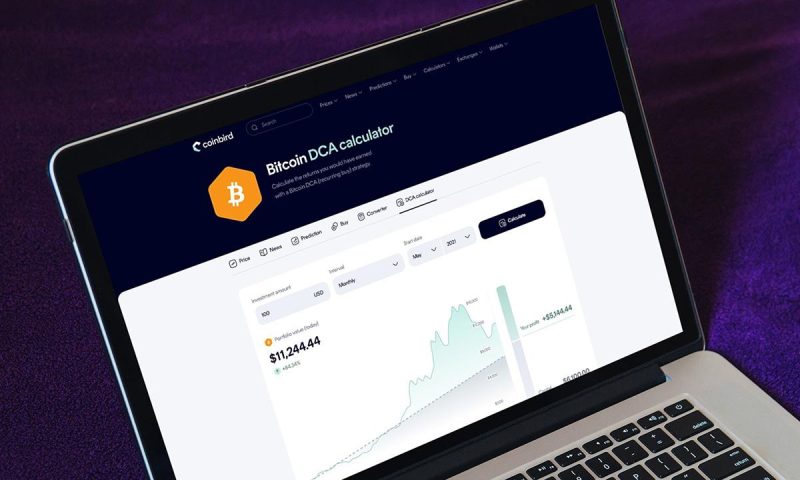
A Bitcoin DCA analysis published by Coinbird on May 19, 2026 found that an investor who began a $100-per-month Bitcoin dollar-cost-averaging plan in January 2015 would have made 137 monthly purchases through May 2026, investing $13,700 total. That investor would now hold a portfolio worth approximately $632,315, a total return of +4,515%. The analysis goes beyond the headline number to test whether the popular "just DCA into Bitcoin" narrative holds up across different starting points and time horizons.
The Headline Numbers Behind the 2015 Scenario
The strategy accumulated Bitcoin at an average acquisition cost of roughly $1,667 per BTC, since early purchases acquired significantly more Bitcoin before prices rose substantially. That average cost figure illustrates dollar-cost averaging's core mechanic. Buying a fixed dollar amount regularly means each purchase acquires more of the asset when its price is low and less when its price is high. That smooths the average entry price across the full investment period, rather than betting everything on a single purchase timing decision.
What a Later Start Date Produced
For investors who started later, near the May 2021 market peak before the 2022 crash, a $100-per-month DCA plan still returned +84.34% across the May 2021 to May 2026 period. That turned $6,100 invested across 61 monthly purchases into approximately $11,244. Over that same specific period, a lump-sum investment of the full amount made entirely upfront in May 2021 returned only approximately +43%. The DCA approach outperformed lump-sum investing in this particular five-year, crash-inclusive scenario.
Why Lump-Sum Actually Beat DCA at Shorter Horizons
Importantly, lump-sum investing beat DCA at the one-, two-, three-, and four-year horizons within Coinbird's tested scenarios. The five-year DCA advantage over lump-sum only emerged after a full crash-and-recovery cycle had played out. The specific claim that "DCA beats lump-sum" isn't a universal truth. It depends heavily on the specific start date and the market regime an investor happens to enter during.
What This Nuance Means for How the Result Should Be Read
This finding complicates a common, oversimplified narrative in crypto investing commentary that recurring purchases are unambiguously superior to investing a lump sum immediately. The Coinbird analysis instead suggests DCA's advantage is conditional. It depends on whether the tested period happens to include a significant price crash followed by a full recovery, rather than DCA being inherently superior as an investment approach in all market conditions.
Volatility Wasn't Eliminated, Even With Disciplined DCA
DCA investors across the full 2015-2026 period still experienced a maximum drawdown of -76.72% during the 2022 bear market. That finding underscores that recurring purchases don't eliminate volatility or the psychological difficulty of holding through severe price declines. An investor following the DCA strategy still had to endure watching their portfolio lose more than three-quarters of its value at one specific point, even though the strategy ultimately produced strong long-term returns by the full period's end.
What Coinbird's Founder Said About the Finding
Philipp, Founder of Coinbird, said the interesting finding isn't simply that Bitcoin went up since 2015. He noted that automatic monthly buying through crashes, all-time highs, and regulatory uncertainty still produced extraordinary long-term results. That framing emphasizes the behavioral discipline aspect of DCA, rather than treating the raw return figure alone as the analysis's main takeaway.
How the Analysis Was Actually Conducted
The analysis simulates recurring Bitcoin purchases at a selected monthly interval using historical CoinGecko price data, with lump-sum comparisons assuming the full planned contribution amount is invested entirely upfront at the start of the selected period. Calculations exclude taxes and trading fees. Real-world after-tax, after-fee returns for any investor replicating this exact strategy would likely be somewhat lower than the headline figures presented.
Long-term, disciplined accumulation strategies like Bitcoin DCA reflect the same patient, structured approach seen in Tramplin's premium staking model built around traditional savings principles, both applying established financial discipline concepts to crypto asset accumulation.
Glossary
- Dollar-cost averaging (DCA): An investment strategy involving regular, fixed-amount purchases of an asset over time, regardless of its price at each purchase.
- Lump-sum investing: Investing the full available capital amount all at once, rather than spreading purchases out over time.
- Maximum drawdown: The largest peak-to-trough decline a portfolio or asset experiences during a specific measured period.
Disclaimer
This overview is for informational purposes only and is not financial or investment advice. Past performance does not guarantee future results, and this analysis excludes taxes and trading fees. Calculations are based on historical CoinGecko price data as compiled by Coinbird.