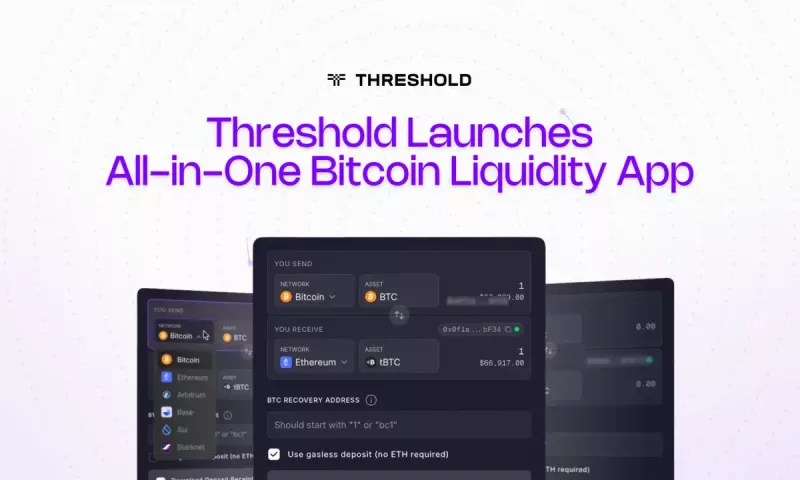
Threshold Network launched an update to its decentralized application on March 3, 2026. It introduces an all-in-one Unified Bitcoin App that lets users route Bitcoin across major chains through a single interface. The new routing interface brings minting, redeeming, bridging, tracking, and native BTC swaps into one application. It replaces what had historically been a fragmented, multi-step process for moving Bitcoin into DeFi.
The Fragmented Workflow This App Replaces
Historically, moving BTC into tBTC and across chains required multiple disconnected workflows: minting in one app, bridging via another protocol, swapping on separate exchanges, and manually checking the best price for each individual transaction. This fragmented process introduced friction, higher execution risk, added costs, and unnecessary complexity for users attempting to access DeFi with Bitcoin. It's a pattern common across the broader Bitcoin DeFi space, where no single interface previously handled the full workflow.
How the Unified Router Actually Works
Instead of manually comparing bridges and liquidity venues, users now receive optimized routing options based on cost, speed, and reliability, such as the fastest or lowest-cost path, all within the Threshold Network App. The router also enables streamlined conversions from assets such as WBTC and cbBTC directly into tBTC on the destination chain. That provides more direct access to Bitcoin liquidity across DeFi ecosystems, without requiring a separate conversion step through an intermediate asset.
Integrated Infrastructure Across Major Networks
The router currently connects Bitcoin, Ethereum, Arbitrum, Base, Sui, and Starknet within one coordinated framework. It integrates native tBTC mint and redeem flows, established bridging infrastructure, and DEX aggregation to ensure reliable settlement across chains. All transactions are tracked in real time and are fully resumable. If a user disconnects or closes a session, progress is preserved, rather than requiring the transaction to restart from scratch.
Native BTC Execution With Deep Liquidity
Native BTC swaps are integrated directly into the routing engine, leveraging deep Ethereum liquidity to deliver competitive pricing and more efficient execution compared to fragmented, chain-specific liquidity pools. MacLane Wilkison, Co-Founder of Threshold Network, said capital should move efficiently across chains without requiring users to manage infrastructure decisions themselves. He framed the app as coordinating liquidity sourcing and settlement behind the interface, to enable more efficient Bitcoin deployment across ecosystems.
Staking-Aware Fee Structure
Fee logic within the app is staking-aware. Eligible T token stakers see applicable redemption fees waived directly within the interface. The app tracks staked T from the connected wallet and automatically applies minting and redemption fee waivers for eligible users. Gasless minting remains available as an opt-in feature, further reducing transaction costs for eligible users beyond the staking-based waiver alone.
What This Means for Threshold's Broader Positioning
By embedding routing intelligence directly into the protocol interface, Threshold captures more activity within its own infrastructure and further strengthens staking incentives tied to network usage. With this launch, Threshold advances its role from Bitcoin asset issuance toward core infrastructure for Bitcoin mobility more broadly, coordinating capital movement across chains rather than functioning purely as a minting mechanism.
Unified, friction-reducing Bitcoin infrastructure like this reflects the same accessibility push seen in THORChain's native cross-chain swap interface. Both aim to consolidate what were previously multi-step, multi-platform processes into a single coordinated flow.
The parallel is worth noting in Avail Nexus Mainnet: One Liquidity Layer for Web3, which covers a related development from a different angle.
This mirrors a similar dynamic covered in Threshold Network Cuts tBTC Minting to One Bitcoin Transfer, where the same underlying trade-off applies.
Glossary
- tBTC: Threshold Network's decentralized, Bitcoin-backed token representing BTC usable across DeFi ecosystems.
- Routing engine: A system that automatically identifies the most efficient path for executing a transaction across multiple available options.
- Staking-aware fees: A fee structure where costs are reduced or waived based on a user's staked token holdings.
Disclaimer
This overview is for informational purposes only and is not financial or investment advice. Cross-chain routing and bridging carry smart contract and execution risk. Confirm current features directly through official Threshold Network announcements.